
Polk County Criminal Court Records
A criminal court record is the case file kept by the court after charges are filed. In Polk County, serious criminal matters are tied to Superior Court and the Clerk of Superior Court, while Magistrate Court may handle preliminary hearings, arrest-warrant applications, bail hearings, extradition hearings, and some minor criminal or ordinance matters. Probate Court also appears in local criminal-adjacent records because misdemeanor traffic court is handled there, and jail roster examples show some DUI and traffic matters assigned to Probate Court or municipal court.
The full criminal court case file is the better source for outcome questions. A jail roster can show arrest date, agency, charge description, bond, warrant number, statute, and court assignment, but it is not the final court disposition. A Polk County criminal court record can show whether a charge was filed, reduced, dismissed, pled, tried, sentenced, or later handled through probation revocation. For a closer look at arrest-to-charge detail before the full case outcome, use the Polk County arrest records and court charges page.
Courts Creating Polk County Criminal Records
Georgia's Superior Court is the general-jurisdiction trial court and handles felony trials. Polk County is in the Tallapoosa Judicial Circuit. The local Judicial System page identifies the District Attorney, Juvenile Court, Magistrate Court, Probate Court, Probation Office, Public Defender, and Superior Court as the local court and justice offices. The District Attorney represents Georgia in criminal matters in Superior Court and Juvenile Court, while the Public Defender represents qualified defendants in criminal cases across Tallapoosa Judicial Circuit courts.
| Court or Office | Criminal Record Role |
|---|---|
| Superior Court | Felony prosecutions, serious criminal files, pleas, trials, sentences, and probation revocations. |
| Magistrate Court | Preliminary hearings, bail hearings, arrest-warrant applications, ordinance matters, and other limited criminal proceedings. |
| Probate Court | Misdemeanor traffic court and related citation records in Polk County. |
| Juvenile Court | Delinquency and child-focused matters with stronger confidentiality limits. |
| District Attorney | Prosecutes Georgia criminal matters in Superior Court and Juvenile Court. |
| Public Defender | Represents eligible defendants in criminal cases, juvenile delinquency, revocations, and appeals. |
The official Tallapoosa Judicial Circuit District Attorney page is assigned to Polk County criminal court records because prosecution decisions shape the filed case file.
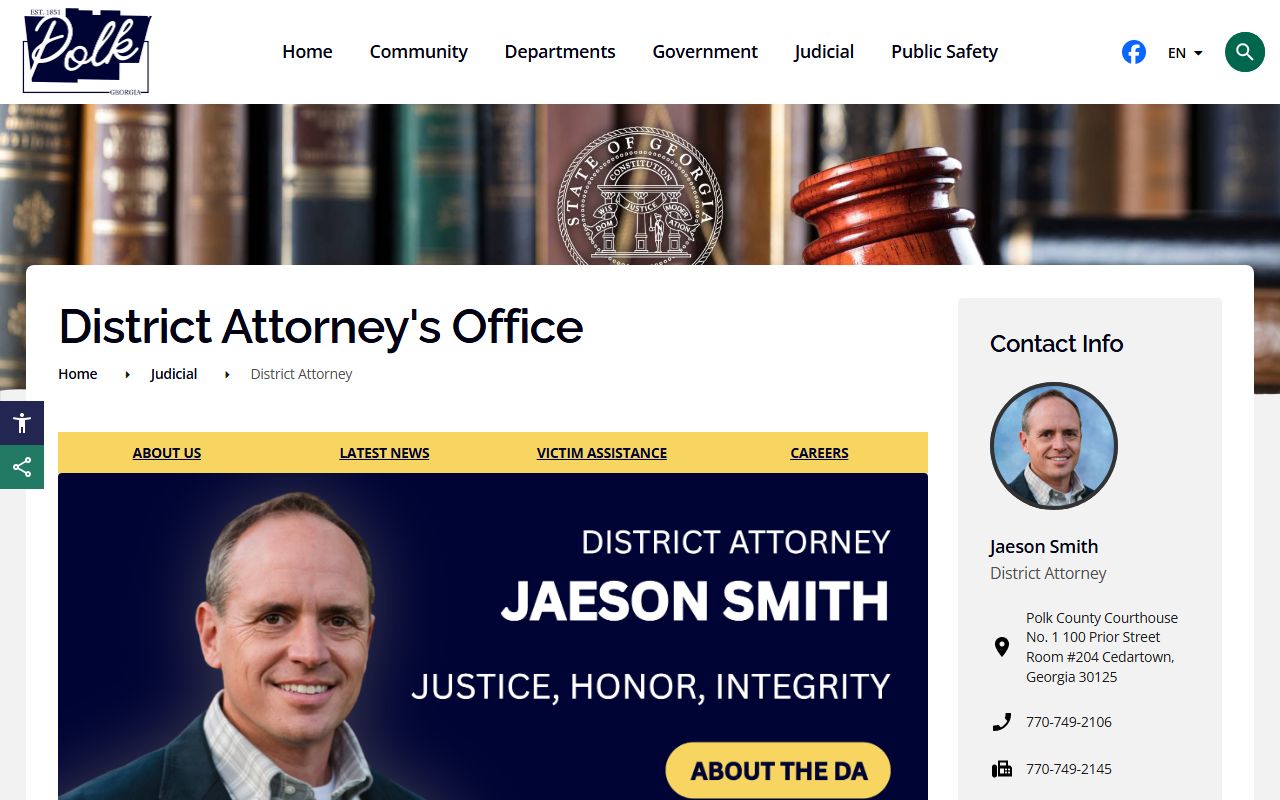
The DA source helps explain why a criminal docket may change after arrest as charges are reviewed, filed, amended, or dismissed.
Search Polk County Criminal Records
There is no single county-hosted all-criminal-cases search in the inspected Polk County sources. For Superior Court criminal files, start with the Clerk of Superior Court, public terminals, GSCCCA eCertification for certified documents, and exact case information when possible. The local Superior Court page says the Clerk's office does not perform criminal searches for the public, so broad name searches should not be treated like a clerk service. A specific case number, defendant name plus date range, court assignment, or disposition request will produce a better records path.
- Identify the court from a citation, indictment, accusation, jail roster court field, notice, or attorney paperwork.
- For Superior Court criminal files, use the Clerk of Superior Court public terminal or request path with as much case detail as possible.
- Check Magistrate Court records if the matter involves preliminary hearings, bail hearings, warrant applications, ordinance violations, or other limited proceedings.
- Read the docket entries for charges, plea, motions, hearings, disposition, and sentence.
- Request a certified copy from the clerk or court if the record must be used for court, licensing, immigration, school, or official purposes.
State-level criminal history is separate from the court file. The GBI record restriction guidance covers criminal history restriction, while the court file still belongs to the court that handled the case.
Polk County Criminal Case Flow
A criminal court record grows as the case moves. After arrest or citation, the first public details may appear in jail or warrant information. The court case file begins to matter when a complaint, accusation, indictment, motion, order, or other court paper is filed. Felony matters often move through prosecutor review and Superior Court, while lower-court or traffic matters may stay in Magistrate, Probate, or Municipal Court depending on the charge and court assignment.
Case flow: Charges Filed › Arraignment › Pretrial / Motions › Plea or Trial › Disposition › Sentencing
| Stage | What the Criminal Court Record May Show |
|---|---|
| Charges Filed | The formal count, statute, severity, court, and charging document when entered into the case. |
| Arraignment | The hearing where charges are presented and the defendant enters or is assigned a plea process. |
| Pretrial / Motions | Requests for rulings, bond changes, continuances, discovery issues, suppression matters, or other pretrial orders. |
| Plea or Trial | A negotiated plea, trial event, verdict, or other resolution path. |
| Disposition | The outcome of each charge, such as guilty, dismissed, nolle prosequi, acquitted, or another court action. |
| Sentencing | Jail, prison, probation, fines, conditions, treatment, revocation, or other court-ordered punishment. |
What Polk County Criminal Records Show
A full Polk County criminal court record is more than a charge list. It can show the case number, court, judge, defendant, attorneys, charges, pleadings, motions, orders, hearing notices, bond events, plea, verdict, disposition, sentence, probation terms, fines, and costs. Some cases also include revocation proceedings, amended charges, dismissed counts, or multiple court assignments. The record should be read charge by charge because one case can have several counts with different outcomes.
| Field | What It Shows |
|---|---|
| Case Number | The court identifier used for docket access, clerk requests, and certified copies. |
| Defendant | The person charged in the criminal case. |
| Charge | The accusation, statute, count, and severity level filed in court. |
| Plea | The defendant's formal answer or negotiated plea entry. |
| Motion | A written request asking the judge to rule on a case issue. |
| Disposition | The outcome of a case or count, such as guilty, dismissed, acquitted, or nolle prosequi. |
| Sentence | The punishment or conditions ordered after conviction or plea. |
| Probation Revocation | A later proceeding alleging violation of probation terms. |
District Attorney and Filed Charges
The Tallapoosa Judicial Circuit District Attorney page lists Jaeson Smith as District Attorney for Polk County, with the office in Courthouse No. 1. The DA's About Us page states that the office represents Georgia in all criminal matters in Superior Court and Juvenile Court and works with local, state, and federal law enforcement to prosecute people charged with crimes. The DA page also states the office handles felony and a variety of misdemeanor cases and assists victims.
The District Attorney biography page is assigned to Polk County criminal court records because it documents the elected prosecutor and local prosecution volume.
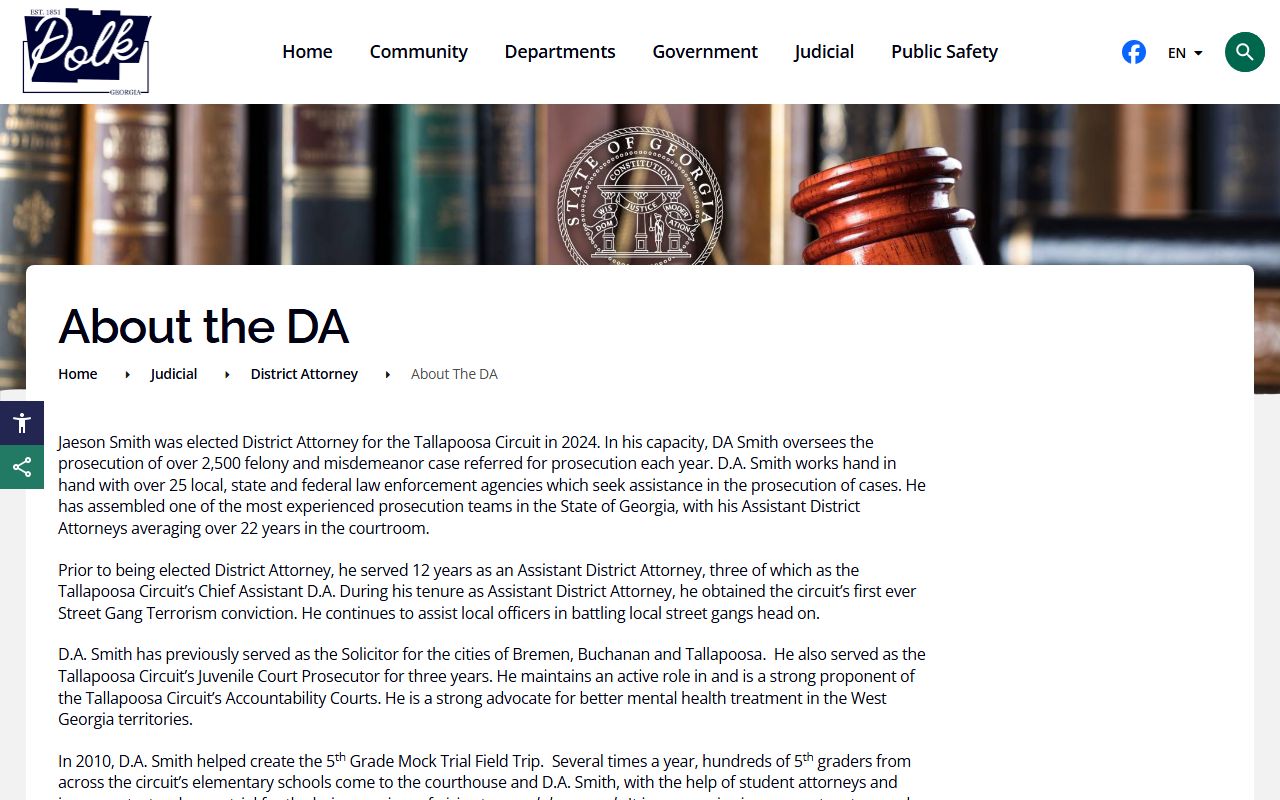
That background gives context for filed criminal cases, but the official case record still comes from the court clerk.
The DA office about page describes the office's role in Superior Court and Juvenile Court prosecutions.
A prosecutor role source is useful because charge status can change through amendment, dismissal, plea negotiation, or trial.
Polk County Charges vs Convictions
A charge is an accusation filed or pursued in the criminal process. A conviction is an outcome after a guilty plea, guilty verdict, or other conviction entry. A Polk County criminal court record can show charges that never became convictions. Some counts may be dismissed, reduced, amended, or entered nolle prosequi, which means the prosecutor declines to proceed on that charge. Reading only the first charge line can create a false view of the case.
| Charge | Conviction | |
|---|---|---|
| Meaning | An allegation or count filed in the court process. | A final guilty outcome by plea, verdict, or conviction entry. |
| Timing | Appears before the case is resolved. | Appears after plea, trial, or final court action. |
| Record Reading | Must be checked against disposition. | Must be checked against sentence and any later appeal or restriction. |
| Polk Example Source | Jail and court entries can show charges and assigned court. | The criminal court file shows final disposition and sentence when available. |
Read Dispositions and Sentences
Disposition is the outcome of a case or charge. Sentence is the punishment or conditions ordered after a conviction. Polk County criminal court records may use terms such as guilty, dismissed, acquitted, nolle prosequi, probation, sentence, bond, and probation revocation. A dismissal on one count does not always mean every count was dismissed. A sentence can include custody time, probation, fines, conditions, treatment, or later revocation proceedings.
- Disposition
- The outcome of a case or charge.
- Nolle prosequi
- A prosecutor's decision not to proceed on a charge.
- Probation revocation
- A proceeding alleging that probation terms were violated.
- Sentence
- The punishment or conditions ordered after conviction.
Public Defender Criminal Records Context
The Polk County Public Defender is David Smith, with an office at 109 East Avenue in Cedartown. The office represents qualifying criminal defendants in the Tallapoosa Judicial Circuit, including criminal cases before Magistrate Court, Probate Court, Superior Court, Juvenile Court, the Georgia Court of Appeals, and the Georgia Supreme Court. The research states that the office also handles juvenile delinquency, probation revocation, and criminal appeals for convicted clients. A person must apply and be found qualified.
The county Public Defender page is assigned to Polk County criminal court records because defense representation can appear in the case file and docket.
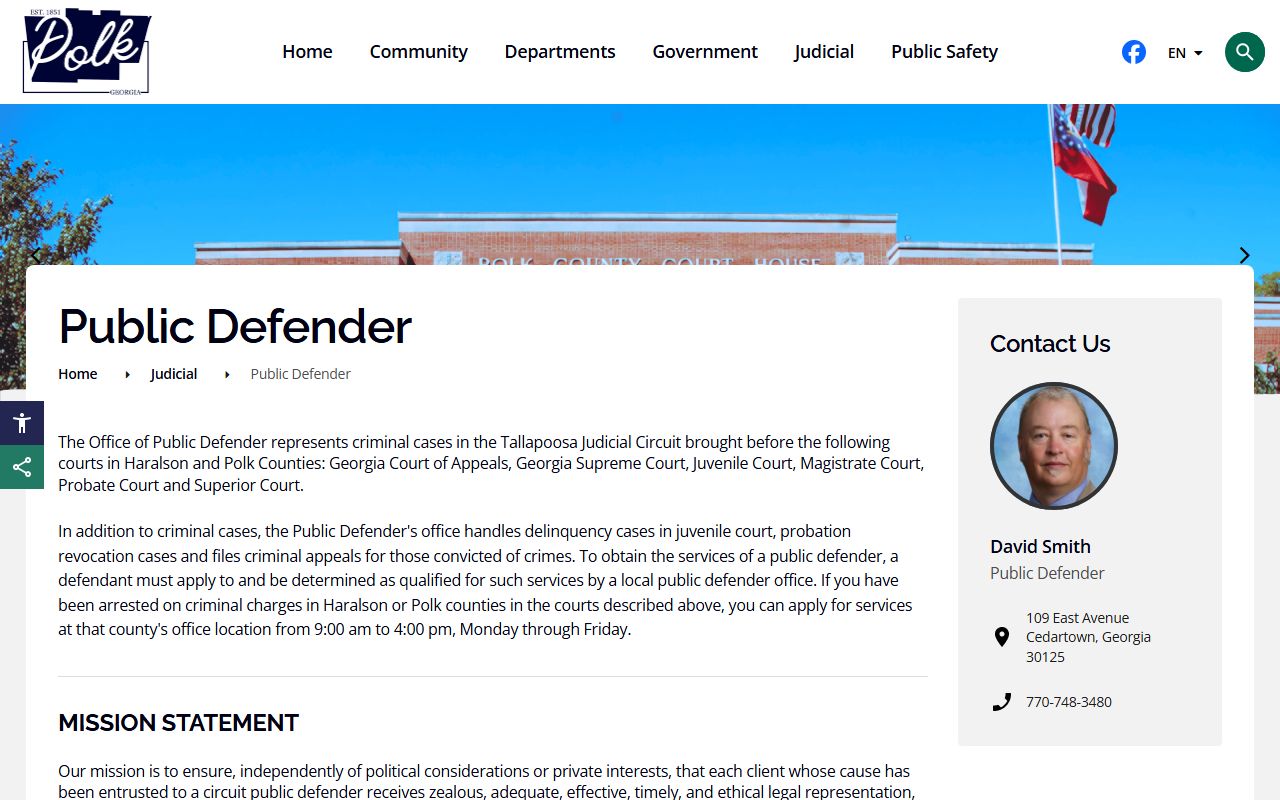
Attorney and defender information helps identify who may receive notices, file motions, or request records in a criminal case.
Sealed vs Restricted Records
Georgia research for Polk County supports the terms record restriction and sealing more clearly than broad use of expungement. GBI explains that O.C.G.A. § 35-3-37 allows restriction of certain criminal history records for non-criminal justice purposes when approved by the prosecuting attorney. For arrests after July 1, 2013, GBI says there is no application process and the prosecutor should be contacted. For arrests before that date, GBI says the person applies through the arresting agency.
| Sealed or Restricted | Expunged | |
|---|---|---|
| Georgia usage | Common term for limiting public access to eligible criminal history or court information. | Often used casually, but Georgia sources emphasize restriction and sealing. |
| Public view | May be hidden from non-criminal justice purposes if approved and reported. | Do not assume physical destruction of every related record. |
| Polk process clue | Contact the prosecutor for post-July 1, 2013 arrests when GBI guidance applies. | Ask the court or agency what remedy is legally available. |
| Juvenile records | May be sealed under juvenile-code rules after eligible events. | Handled under separate juvenile law and court orders. |
The GBI criminal history record restriction page is the assigned state source for restriction guidance.
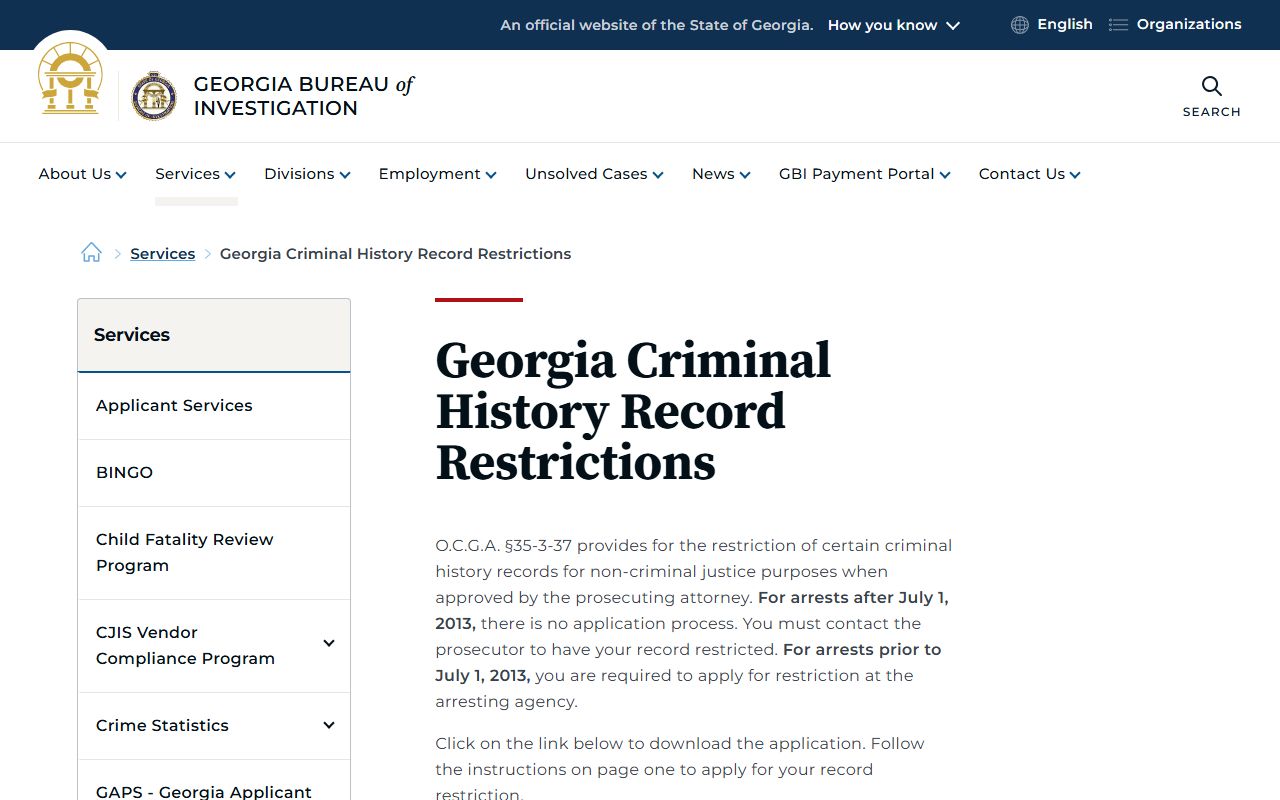
GBI guidance should be read alongside the court file because a jail booking, court disposition, and state criminal history entry are separate records.
Public Access to Polk County Criminal Records
Adult criminal court files are generally public unless a law or court order limits access. The Georgia Open Records Act is a public-records framework, but court rules, sealing orders, juvenile law, and criminal-history restriction rules can limit what is visible. The Clerk of Superior Court is the source for Superior Court criminal case records, while Magistrate, Probate, Juvenile, and Municipal Courts hold their own limited records. Certified copies must come from the court or clerk with custody of the original record.
The DA Victim Assistance source matters because victims and witnesses may interact with the criminal case file without controlling prosecution. The DA FAQ notes that victims may ask that charges not go forward, but the prosecutor makes the decision, and a victim must appear in person, fill out a request-to-dismiss form, and bring government-issued ID. Defendants with attorneys cannot discuss case details directly with the DA, while unrepresented defendants may call and ask to speak with the assigned prosecutor.
The DA Victim Assistance page is assigned to Polk County criminal court records because victim notices and prosecution choices affect criminal case progress.
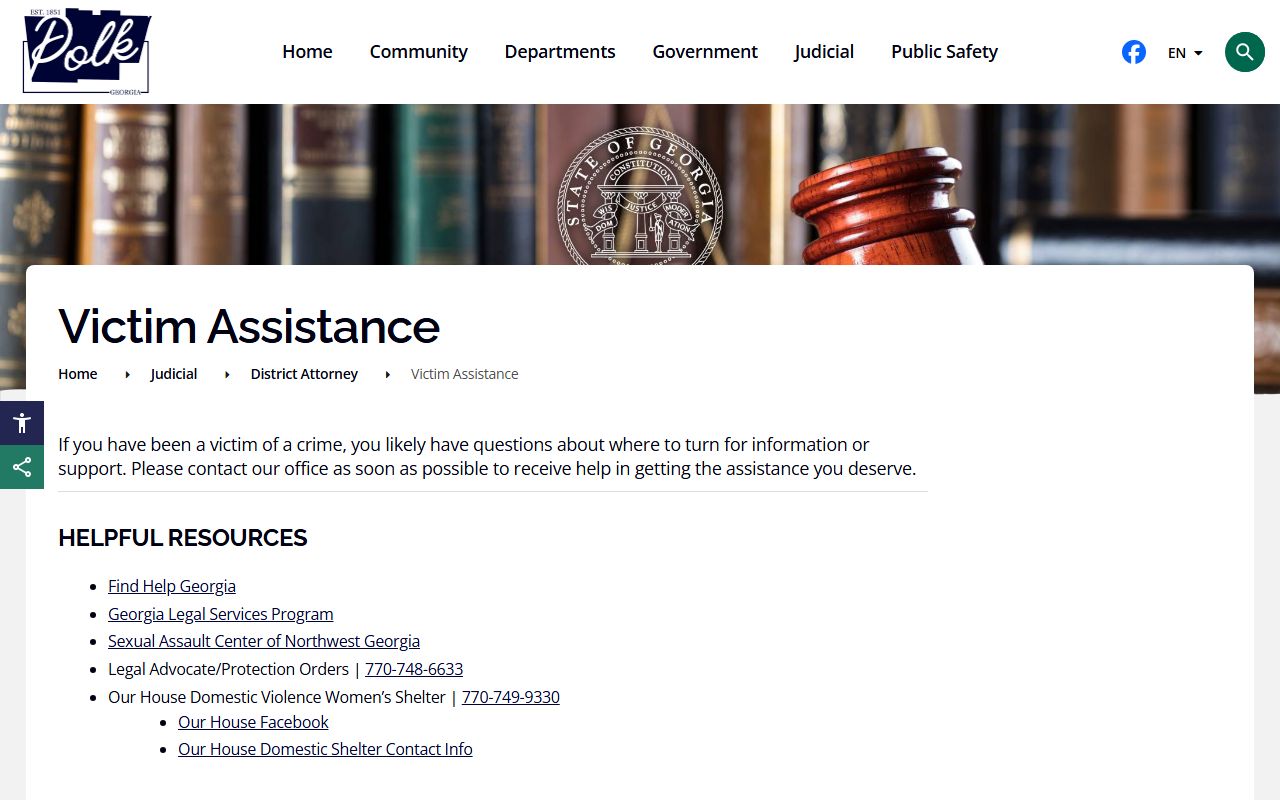
Victim assistance information gives context for subpoenas, victim impact statements, and prosecution communication, not direct public search authority.
Note: A public criminal docket line should be checked against the final disposition before drawing conclusions.
Restricted Polk County Criminal Records
Some Polk County criminal records or related records are not open to general public search. Juvenile records are more restricted than adult records, and O.C.G.A. § 15-11-701 governs juvenile sealing. Sealed criminal case files, restricted criminal history entries, active investigative material, protected witness or victim information, medical details, financial account numbers, Social Security numbers, and protected addresses may be withheld or redacted. A user may need proof of identity, party status, attorney status, or a court order.
A criminal record cleanup request should first identify the record type: jail booking, court case, or state criminal history. Booking records can remain visible even when a court case later shows dismissal. Court-file sealing may require a court order. State criminal-history restriction follows GBI guidance and prosecutor or arresting-agency steps depending on the arrest date.